Polish Citizenship by Descent: The Documents You'll Typically Need, from Birth Certificates to Naturalisation Papers
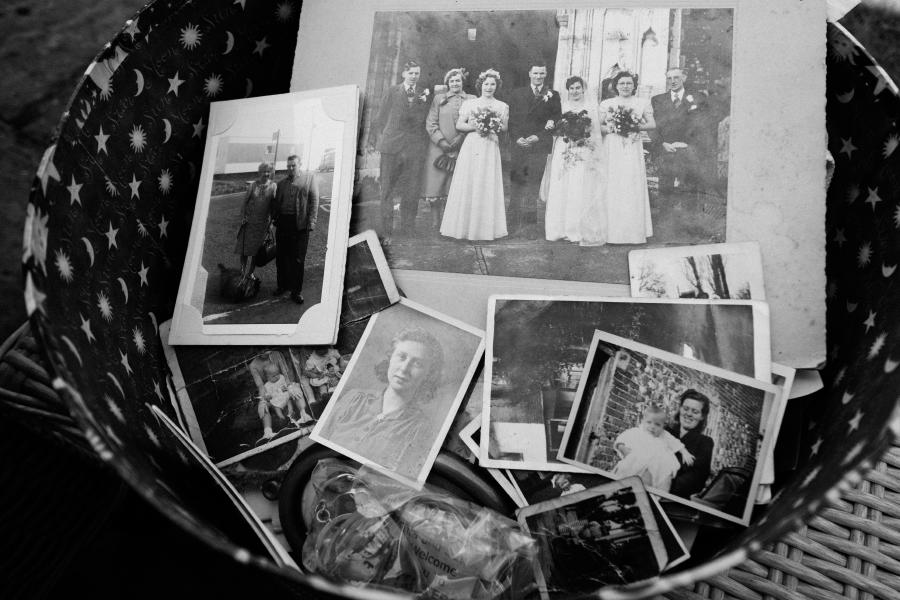
If your parents, grandparents or even great-grandparents were Polish, there is a good chance you are already a Polish citizen without knowing it. Polish citizenship passes down through the bloodline, and there is no generational limit. For many British families, whose Polish roots go back to the soldiers and airmen who settled here after the Second World War, or to those who arrived after 2004, that opens the door to a Polish passport and the right to live and work anywhere in the EU.
The catch is paperwork. You are not applying to become Polish; you are asking the Polish authorities to confirm that you already are. The formal procedure is called confirmation of possession of Polish citizenship (potwierdzenie posiadania obywatelstwa polskiego), and the whole case rests on the documents you put in front of the decision-maker.
In this guide I walk through the documents most applicants need, why each one matters, and how to get them ready.
How the process works
If you live in the UK, you apply through the Polish consulate that covers your area: London, Manchester, Edinburgh or Belfast. The consulate forwards your application to the provincial governor (wojewoda) in Poland, who makes the decision. You can submit in person by appointment or by post, but not by email. At the time of writing the fee is £88, though it is worth checking the consulate’s website before you pay.
The principle behind the whole application is simple: you must prove an unbroken chain of Polish citizenship from a Polish ancestor down to you. That means showing that:
- your ancestor was a Polish citizen;
- citizenship passed from each generation to the next; and
- nobody in the chain lost it along the way.
Every document you submit supports one of those three points.
1. The application form
The application must be made on the official form, and it must be completed in Polish. It asks for personal details about you, your parents and your grandparents, so gather names, dates and places of birth before you start. Accurate Polish spellings of your ancestors’ names and birthplaces matter here, because the form will be checked against the documents that follow.
2. Your own documents
These establish who you are and connect you to your parents:
- Full birth certificate. If you were born outside Poland, you need the full (long-form) certificate that names your parents. The short UK certificate does not show parentage and will not be accepted. Copies can be ordered from the General Register Office.
- Marriage certificate, divorce decree or a spouse’s death certificate, to show your current marital status.
- Name change documents, such as a deed poll or a marriage certificate, if your name differs from the one on your birth certificate.
- Valid passport or ID, which the consulate will check to verify your identity.
3. Documents linking each generation
For every generation between you and your Polish ancestor, you need documents that prove the family link. In practice that usually means:
- Birth certificates for each parent or grandparent in the line.
- Marriage certificates for each couple in the line. These are more important than many people expect. For children born before 1951, Polish law generally passed citizenship through the father where the parents were married, so the marriage certificate can decide which parent’s citizenship counts.
- Name change documents for anyone whose surname was anglicised or changed. Kowalczyk becoming Kowalski, or Wojciechowski becoming Walsh, is common, and every change needs a paper trail.
4. Proof that your ancestor was a Polish citizen
This is often the hardest part. You need evidence that your ancestor actually held Polish citizenship, not just that they were born in a place that is now in Poland. Useful documents include:
- Polish passports or identity cards (dowód osobisty), including old and expired ones.
- Polish birth, marriage or baptism records, from civil registry offices or parish and state archives in Poland.
- Military records. Many British-Polish families descend from men who served in the Polish Armed Forces in the West. Service records, Polish Resettlement Corps papers and similar documents often record citizenship.
- Residence registration records, school records, voter lists or other Polish official documents.
If your ancestor left Poland a long time ago, you may have to combine several pieces of evidence rather than rely on one decisive document. The provincial governor can also ask for extra documents if there are gaps.
5. Naturalisation papers: the documents that can make or break a case
This is the section people most often overlook. The key question is whether anyone in the chain lost Polish citizenship, and the most common reason was taking another nationality.
Under the Polish citizenship law in force before 19 January 1951, a Polish citizen who acquired foreign citizenship generally lost Polish citizenship. So if your grandfather became a British subject in 1948, that may have broken the chain, and any children born after his naturalisation may not have inherited Polish citizenship from him. If he naturalised after the 1951 law came into force, the position is usually very different.
Because the date matters so much, you will usually need:
- Naturalisation certificates or records for any ancestor who took British (or other) citizenship. Older UK naturalisation records are held by the National Archives; for more recent naturalisations, the Home Office can confirm the details for a fee.
- Your own naturalisation certificate, if you were born in Poland and later became a British citizen.
- In some cases, evidence that an ancestor did not naturalise, or did so only after a particular date.
The rules on loss of citizenship have changed several times over the past century, and they also cover situations such as foreign military service. If there is any doubt about whether the chain was broken, it is worth getting legal advice before you apply.
6. Originals, certified copies and apostilles
The consulate generally needs original documents, or copies certified by a consul as true copies. Your ancestors’ documents are usually scanned and returned, but documents about you may be kept, so order extra copies of your own certificates.
Since Brexit, UK documents count as non-EU documents. UK public documents may need an apostille from the Foreign, Commonwealth & Development Office, so check what your consulate requires before you send anything. Some documents issued in EU countries can come with a multilingual standard form under EU Regulation 2016/1191 instead of a translation.
7. Sworn translations into Polish
Every document that is not in Polish must be translated into Polish by a Polish sworn translator (tłumacz przysięgły) or by a consul. An ordinary or UK-certified translation is not enough; it has to be a sworn translation by a translator appointed by the Polish Minister of Justice.
A good translator does more than translate the words. Names, places and dates have to match exactly across documents that may have been issued decades apart, in different countries and in different spellings. Inconsistencies are one of the most common reasons for delays and requests for further documents, so it pays to have them spotted before you submit.
After confirmation
Once your citizenship is confirmed, there are usually further steps before you can get a passport. These include registering your UK birth certificate (and marriage certificate, if you are married) in the Polish civil register, a process known as transcription (transkrypcja), and obtaining a PESEL number. These steps need sworn translations too, so it makes sense to plan for them from the start.
A quick checklist
- Application form completed in Polish
- Full (long-form) birth certificates for you and each generation
- Marriage certificates for each generation
- Name change documents
- Proof that your ancestor was a Polish citizen
- Naturalisation records for anyone who took another nationality
- Originals or consul-certified copies, with apostilles where required
- Sworn translations into Polish
How I can help
I’m Ewa Hayward, a sworn Polish–English translator approved by the Polish Ministry of Justice and a full member of the Chartered Institute of Linguists (MCIL). I translate birth, marriage and death certificates, naturalisation papers, deed polls and other civil documents for citizenship confirmation and transcription, and I check names and dates for consistency across your whole file.
If you’re gathering documents for a Polish citizenship application, get in touch through ewa-hayward.co.uk for a quote.
This article is general information, not legal advice. Requirements can vary between consulates and change over time, so always check the current guidance from the Polish consulate that covers your area. For complex cases, particularly where an ancestor may have lost Polish citizenship, consider speaking to a lawyer who specialises in Polish citizenship law.
Citizenship-by-Descent Polish-Citizenship Polish-English Legal-Translation